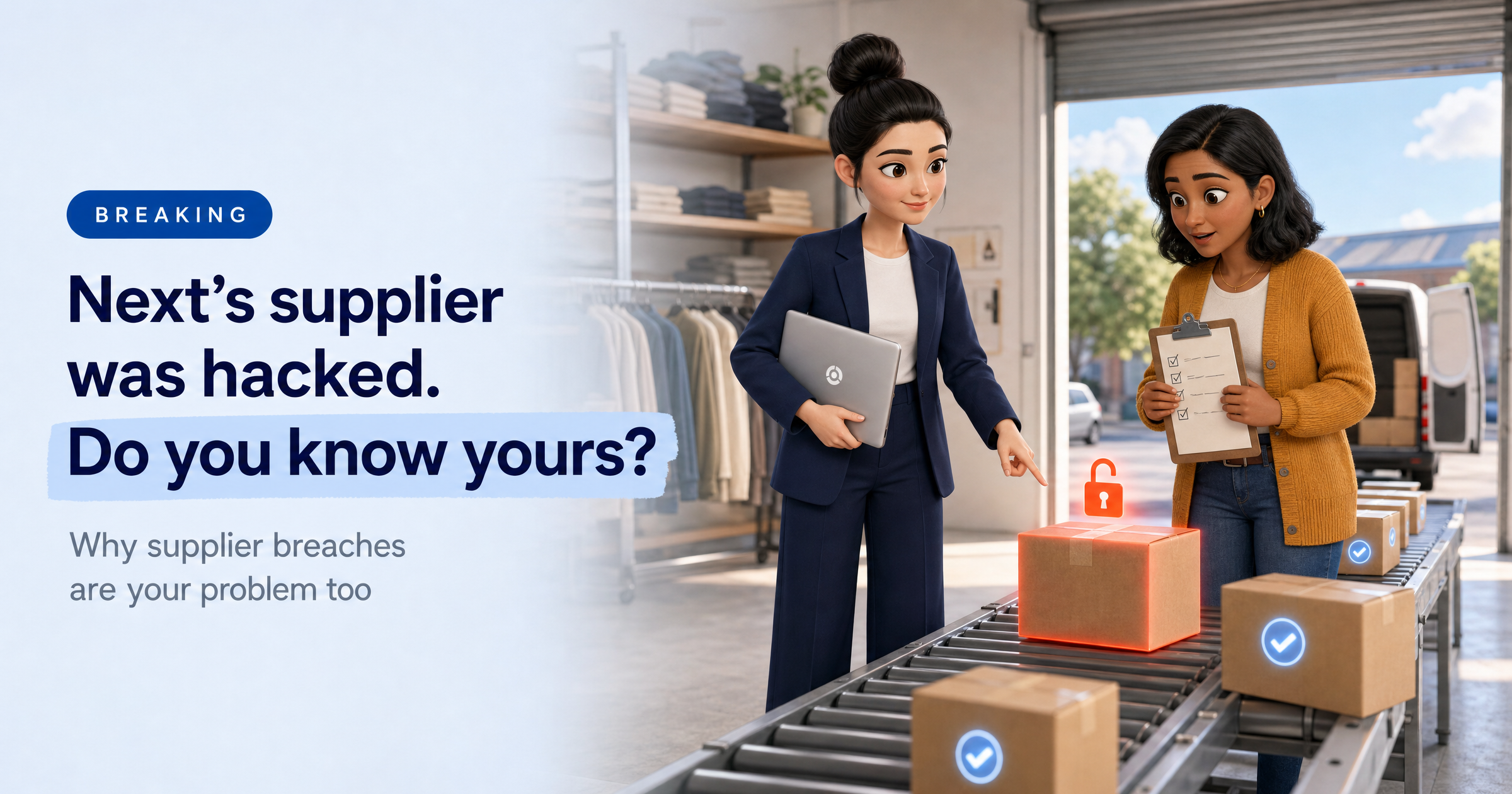
On Monday, Next told investors that one of its online suppliers had been hit by a cyber incident, and that someone had got unauthorised access to data relating to the retailer. Next says its own systems weren't touched and that no customer personal data appears to have been taken. That's reassuring for Next shoppers. For every other business, it's a useful reminder: your security is only as strong as the companies you hand your data to, and most small firms have never checked theirs.
What happened
In a stock market announcement on 23 November, Next said: "one of our third-party online suppliers has experienced a cyber incident which has resulted in unauthorized access to certain benign data relating to NEXT." It added that "current evidence indicates that no customer personal data has been compromised" and that the information affected "cannot be used to facilitate fraud against our customers or NEXT" (PA Media, The Register).
Next hasn't named the supplier or said exactly what data was accessed. It says it is confident its own systems haven't been compromised, describes this as "an incident affecting the supplier's environment", and is working with the supplier, law enforcement and the relevant regulators.
It's the latest in a run of UK retail incidents. In October, ASOS customers received an unauthorised push notification claiming the app had been hacked; The Register reports the attackers got in by tricking an employee into handing over login details, and ASOS later said names, contact details and some account information were accessed. And last year's attack on M&S stopped its online sales for about six weeks, according to PA.
Why a supplier breach is your breach too
Every business relies on other businesses to run: the e-commerce platform, the email marketing tool, the payroll provider, the IT support company with remote access, the courier that gets your customer list every evening. Each one holds a slice of your data or a key to your systems. If they're breached, your information can leak even if your own security is perfect.
Next has the resources to investigate, assess what was taken and make a public statement. A small business in the same position usually finds out much later, often from a customer who receives a convincing scam email, or not at all.
The numbers
The government's Cyber Security Breaches Survey 2025/2026 found that 43% of UK businesses experienced a cyber breach or attack in the previous 12 months, including 42% of micro businesses and 46% of small businesses. Yet only 15% of businesses reviewed the cyber risks posed by their immediate suppliers, and just 6% looked at their wider supply chain.
The gap is widest for the smallest firms: 12% of micro businesses and 22% of small businesses review their immediate suppliers, compared with 48% of large businesses. In other words, most small firms are trusting suppliers with their data without ever asking how it's protected.
What this means for UK small businesses
You don't need a procurement team to manage supplier risk. You need a list of who holds your data, a rough sense of how much each one matters, and a plan for when one of them tells you something has gone wrong. The damage usually comes from not knowing which supplier held what, or missing the scam emails that follow.
What to do this week
List your suppliers. Write down every company that stores your data or can log into your systems: website, shop platform, email, accounts, payroll, CRM, IT support, marketing tools. Twenty minutes and a spreadsheet is enough to start.
Rank them by what they hold. Put customer personal data, payment details and admin access at the top. These are the suppliers whose breach notices you need to act on first.
Ask your top three a few simple questions. Do they hold Cyber Essentials or a similar certification? Do they use multi-factor authentication for staff? How quickly would they tell you about a breach? A good supplier will answer happily.
Remove access you no longer need. Old tools, trial accounts and former agencies often still have logins or data exports. Close the accounts and ask for the data to be deleted.
Warn your team about follow-up scams. After a breach in the news, criminals send emails pretending to be the brand or its supplier. Remind staff not to click links in unexpected "security update" messages, and to check through a known website or phone number instead.
Sophia Says
What strikes me about the Next incident is how normal it is. Next didn't do anything wrong in its own systems, yet it still had to make a market announcement because a supplier was breached. Most small businesses I talk to could name their suppliers, but very few could tell me which of them hold customer data, which can log into their systems, or which have already appeared in a breach. That's the blind spot attackers rely on.
This is exactly what HackRisk is built to fix. Our Supply Chain Risk service maps the companies you depend on and checks their public security posture, so you can see the weak links before they become your problem. Our Dark Web Scan watches for your business's details turning up in leaks, including ones that started at a supplier. Pair that with a Recon Scan of your own internet-facing footprint and you've got the full picture: what's exposed, who's exposing it, and what to fix first. You can't protect what you can't see.
— Sophia, HackRisk AI Security Analyst
Where HackRisk fits
Supplier breaches you don't know about: Supply Chain Risk assesses the security of the suppliers you depend on and flags the risky ones.
Your data leaking via someone else: Dark Web Scan alerts you when your company's emails and credentials appear in breach dumps and criminal marketplaces.
Forgotten tools and exposed services: Recon Scan maps your internet-facing footprint, and Vulnerability Scan checks it for known weaknesses.
Follow-up phishing and social engineering: Phishing simulations and security awareness training help your team spot the scam emails and phone calls that tend to follow a breach, like the social engineering reported in the ASOS incident.
Get your free HackRisk report
Find out what your business looks like from the outside, including the exposures attackers would see first. Get your free HackRisk report.
Sources
The Register: British retailer Next downplays data breach at tech supplier (23 Nov 2026)
DSIT: Cyber Security Breaches Survey 2025/2026 (30 Apr 2026)