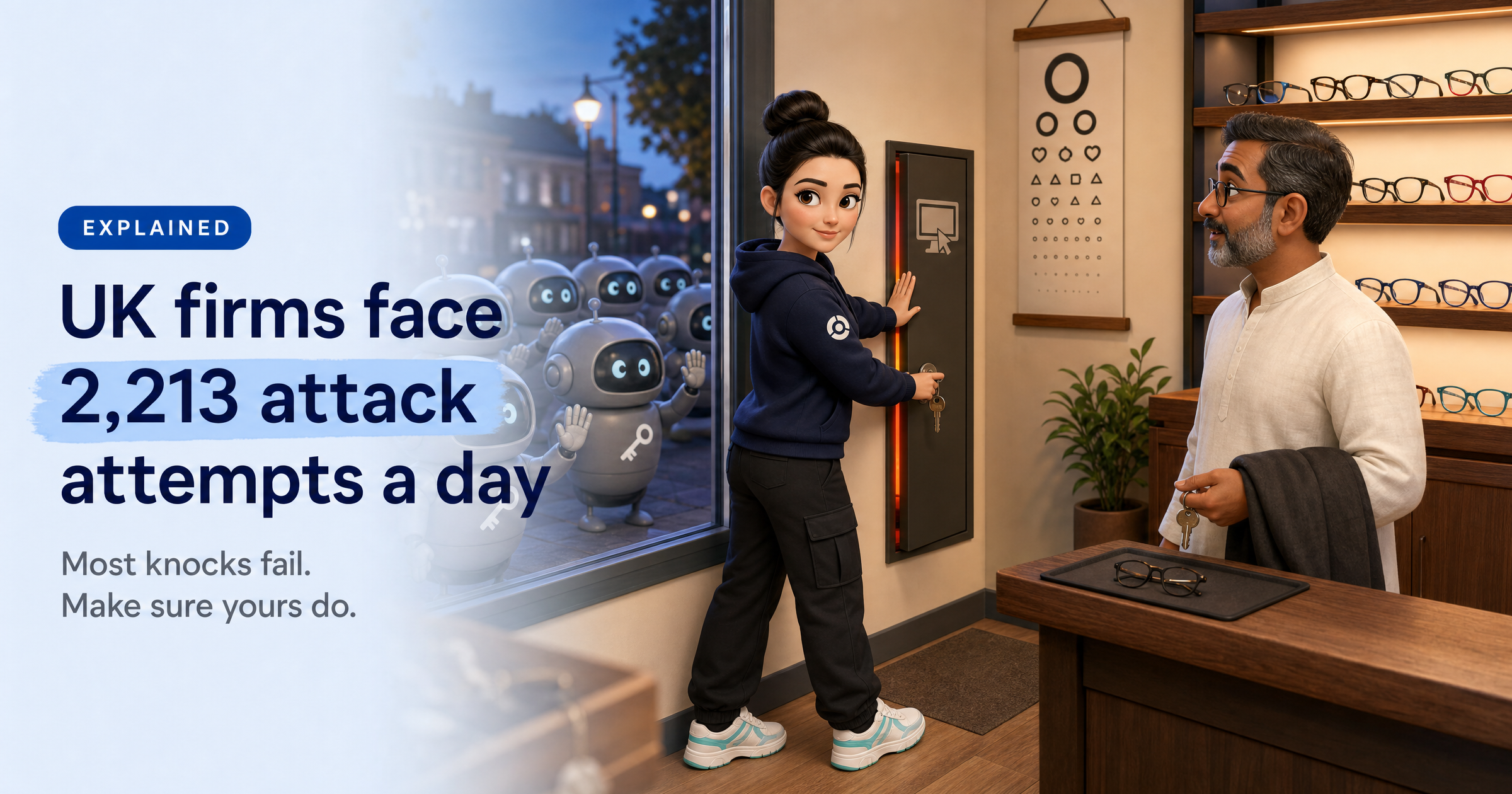
Most businesses already run some kind of security training. An annual video. A policy document everyone signs and nobody reads again.
It satisfies a requirement, but it rarely changes what anyone actually does when a real decision needs making.
Our Security Awareness Training is built to change that.
What good training actually covers
Effective training isn't a single event - it's an ongoing habit-building exercise, covering fundamentals like how to recognise phishing attempts, why it's risky to reuse passwords across accounts, how to handle sensitive data, and what to do when something looks off.
The goal isn't to turn every employee into a security expert. It's to make the safe choice the automatic one - even under pressure.
This matters because most successful attacks don't rely on breaking through technical defences. They rely on a person, in the middle of an ordinary day, making a small decision that seems perfectly reasonable at the time.
Why the numbers back this up
Phishing remains one of the most common ways UK businesses are targeted, and it isn't slowing down.
Sophos's 2026 State of Ransomware report found that malicious email and phishing together account for roughly half of all ransomware attacks - making them, combined, the single biggest way attackers get in. Compromised credentials, often the result of weak or reused passwords, were involved in a further 23%.
Both of those are exactly the kind of everyday decisions - clicking a link, reusing a password - that awareness training is built to change.
Training doesn't remove that risk entirely, but it measurably narrows the gap between a phishing attempt and a successful one.
Why once a year isn't enough
Threats change, and so does the way attacks are written.
A training content from a year ago may not cover the tactics attackers are using now.
Ongoing, regularly refreshed training keeps pace with how attacks are evolving, rather than teaching a snapshot of what mattered when the course was written.
Training works best paired with testing
Knowing what good training looks like on paper and knowing whether it's sunk in are two different things.
That's where our Phishing Simulations come in - safe, realistic tests that show you where the gaps genuinely are, so training effort goes where it's actually needed rather than being spread evenly across a team that mostly already gets it.
Getting started
Security Awareness Training is an optional add-on to HackRisk, available exclusively to subscribers. You can learn more about our training programme or get in touch for more detailed information.
In the meantime, you can get a free HackRisk Report any time you like. It's completely free, and arrives within 24 hours.