Example report
See exactly what lands in your inbox.
Every HackRisk Report is eight pages, written to be read by a board rather than a security team. This is a genuine one, run against a public test domain. Yours arrives within 24 hours, free of charge.
Start Your Free Trial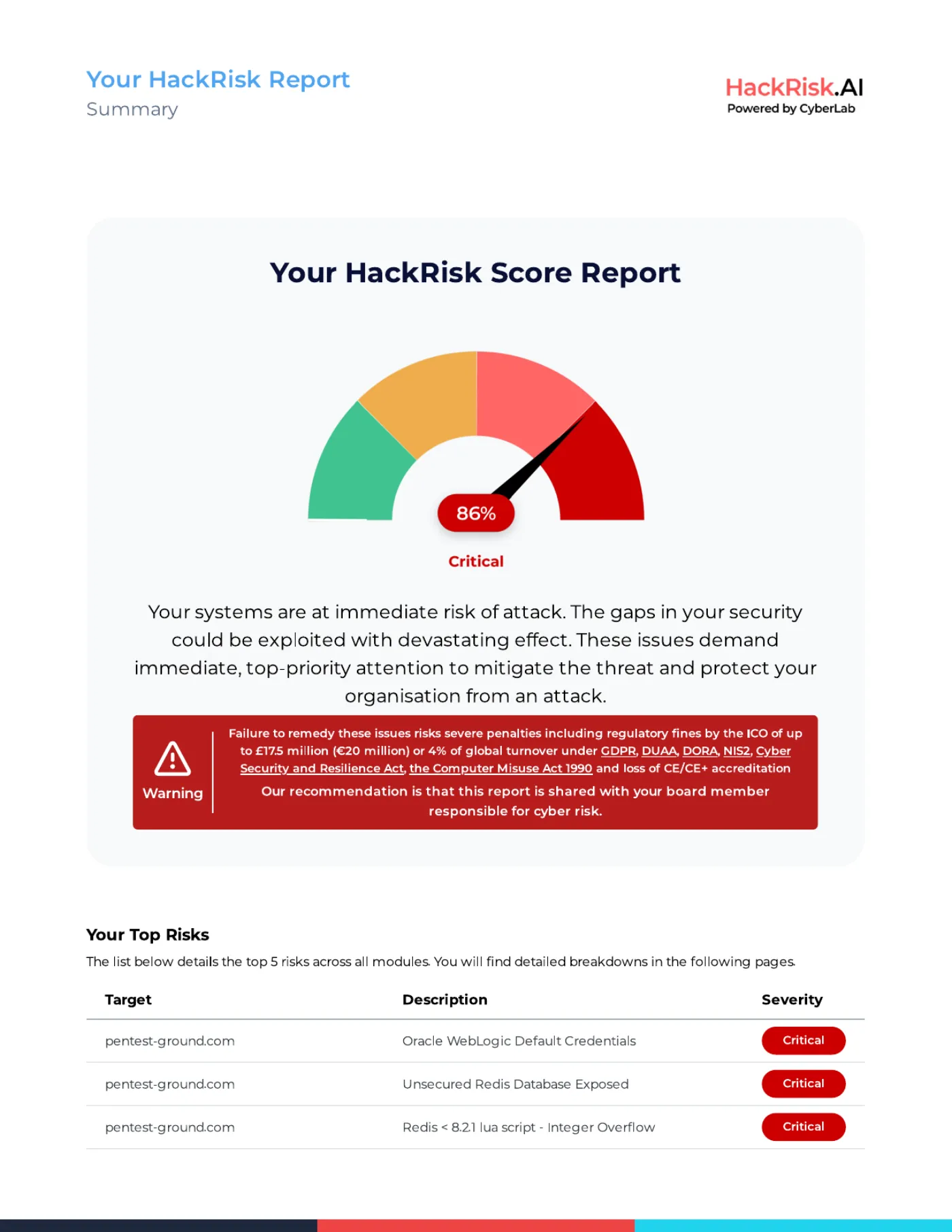
Select any page to view it full size.
What is inside
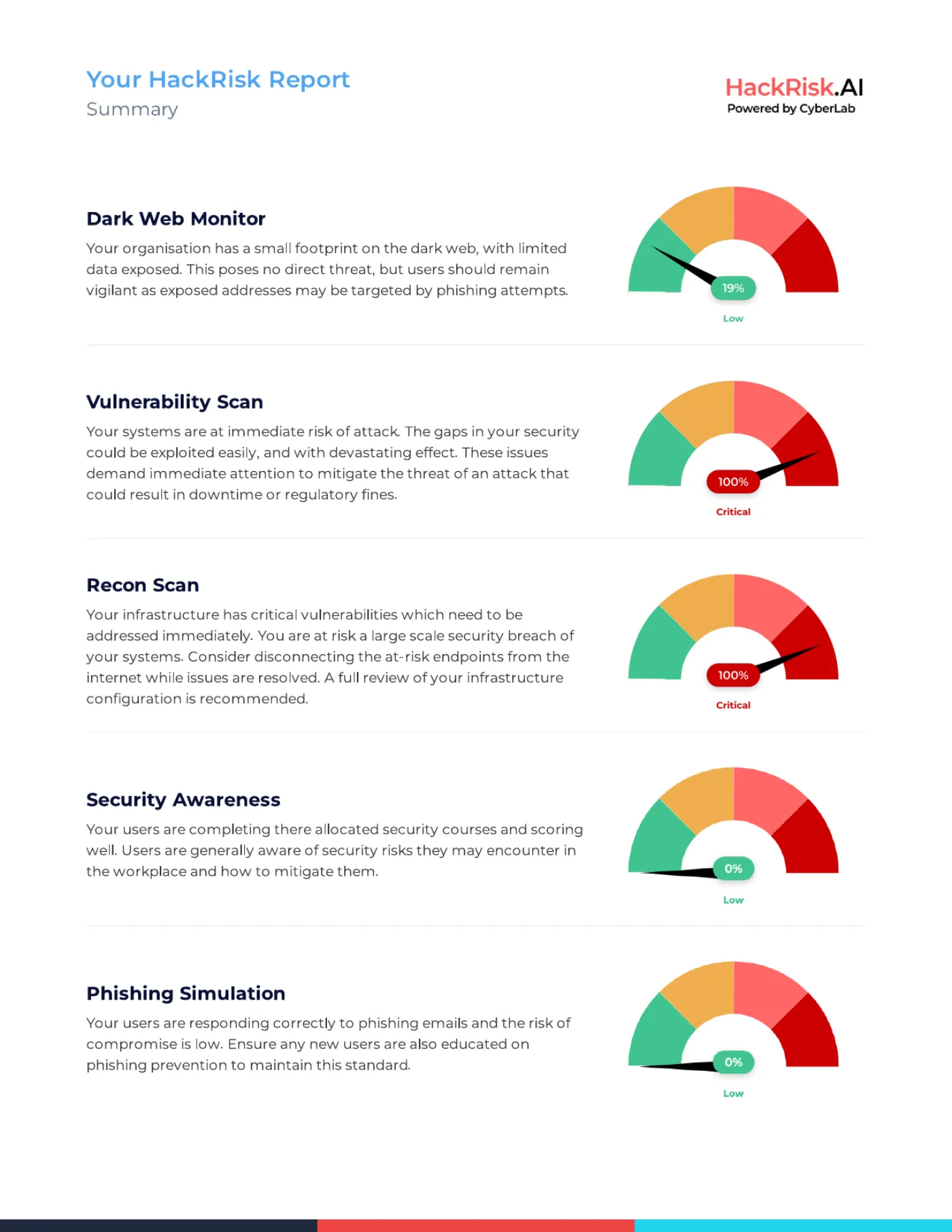
Six modules, each scored on its own and rolled into the number on page one.
Your score, and what it means
The report opens on a single number and a verdict written in plain English, so the first thing you read is whether this needs attention today or next quarter. There is no jargon to decode and no dashboard to log into. Underneath it sits the warning we would want a board to see: which regulations the findings touch, and what failing to act on them exposes the business to. It is written to be forwarded to someone who does not work in security.
How the HackRisk Score works →The five risks worth acting on first
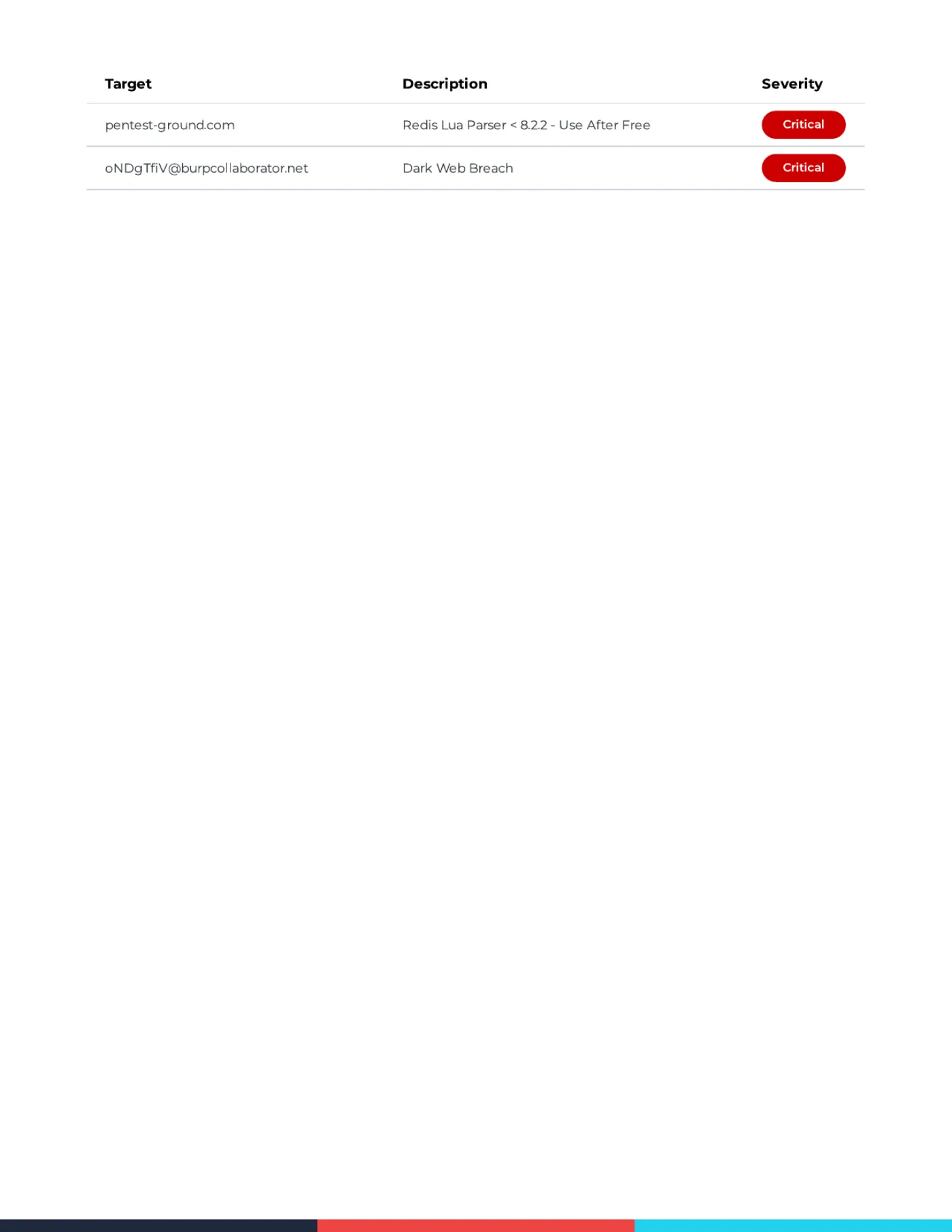
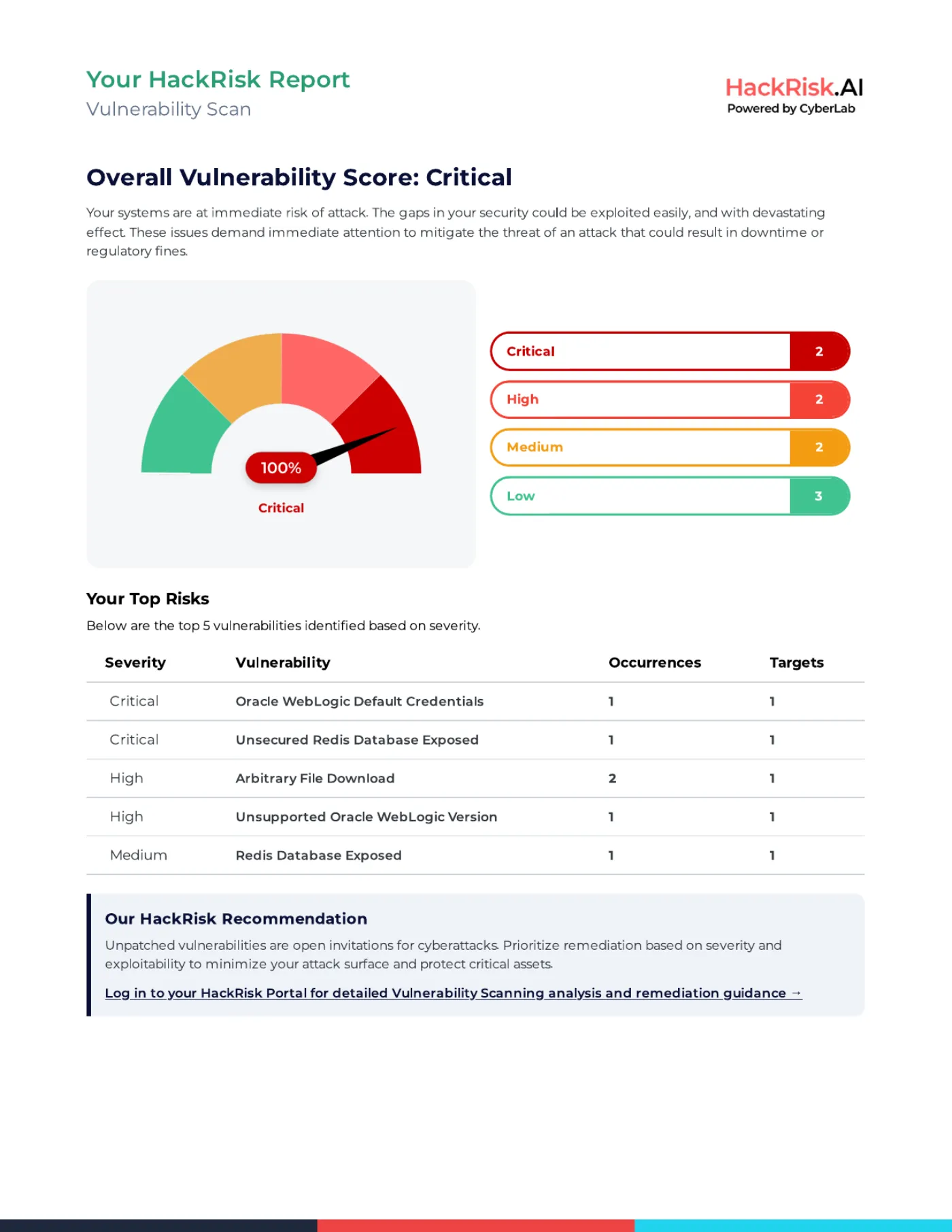
Every scan finds more than anyone can fix at once, so the second page ranks the top five across all modules: the affected target, what the issue actually is, and how severe it is. Each one is expanded later in the report with the detail an engineer needs. The ordering is the useful part – it turns a long list of findings into a short list of decisions.
More on Vulnerability Scanning →What is already exposed on the dark web
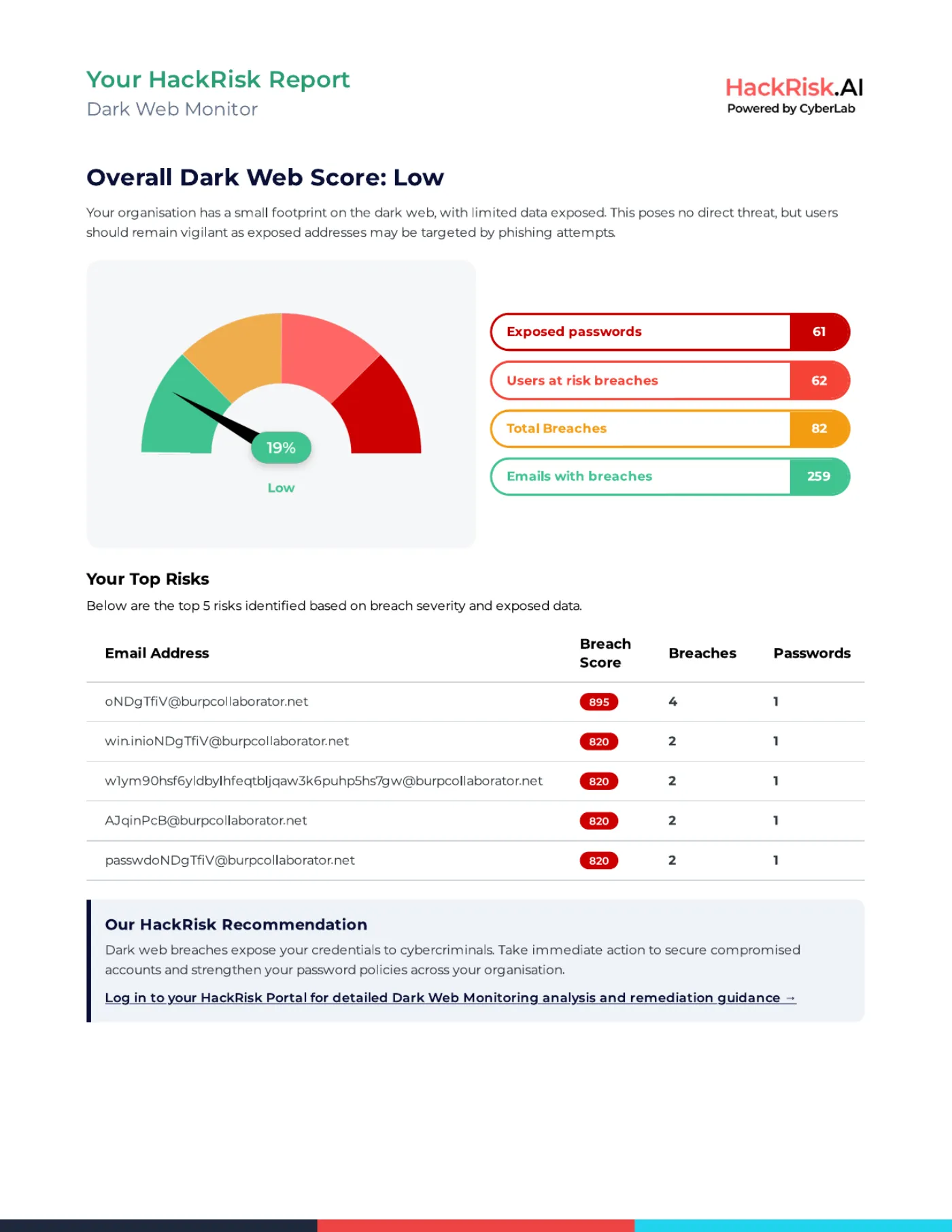
Two pages cover credentials and company data found circulating in breach dumps and criminal marketplaces, graded by how much is out there and how exploitable it is. Where passwords have leaked, the report says whose and from where, because a credential that still works is a live route in rather than a historical footnote.
More on Dark Web Scanning →The attack surface you did not know you had
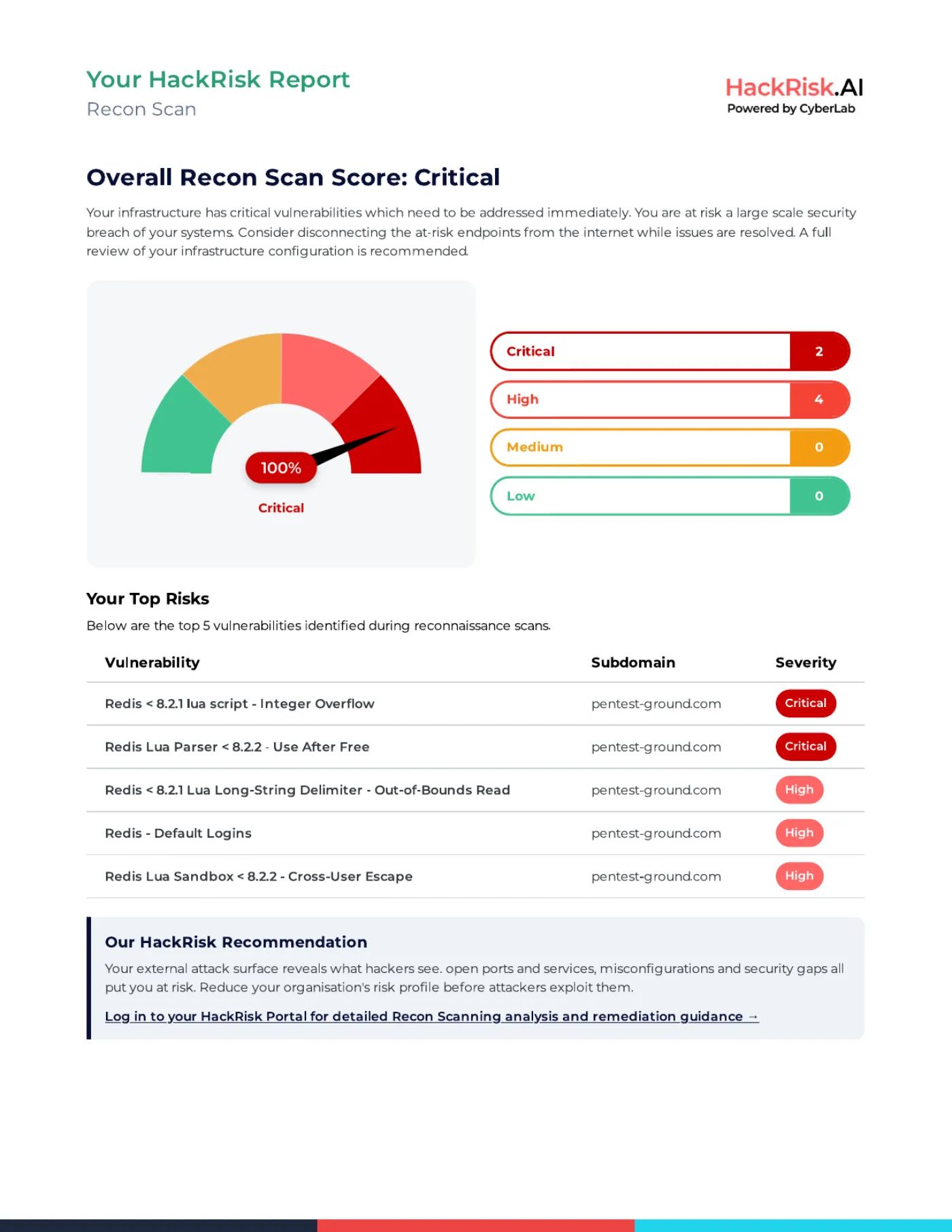
The recon section maps every internet-facing asset we can find from the outside, including the ones nobody remembers standing up. Forgotten subdomains, exposed admin panels and stale configurations all show up here, because an attacker looking for a way in does not limit themselves to the systems on your asset register.
More on Recon Scanning →How your people are doing
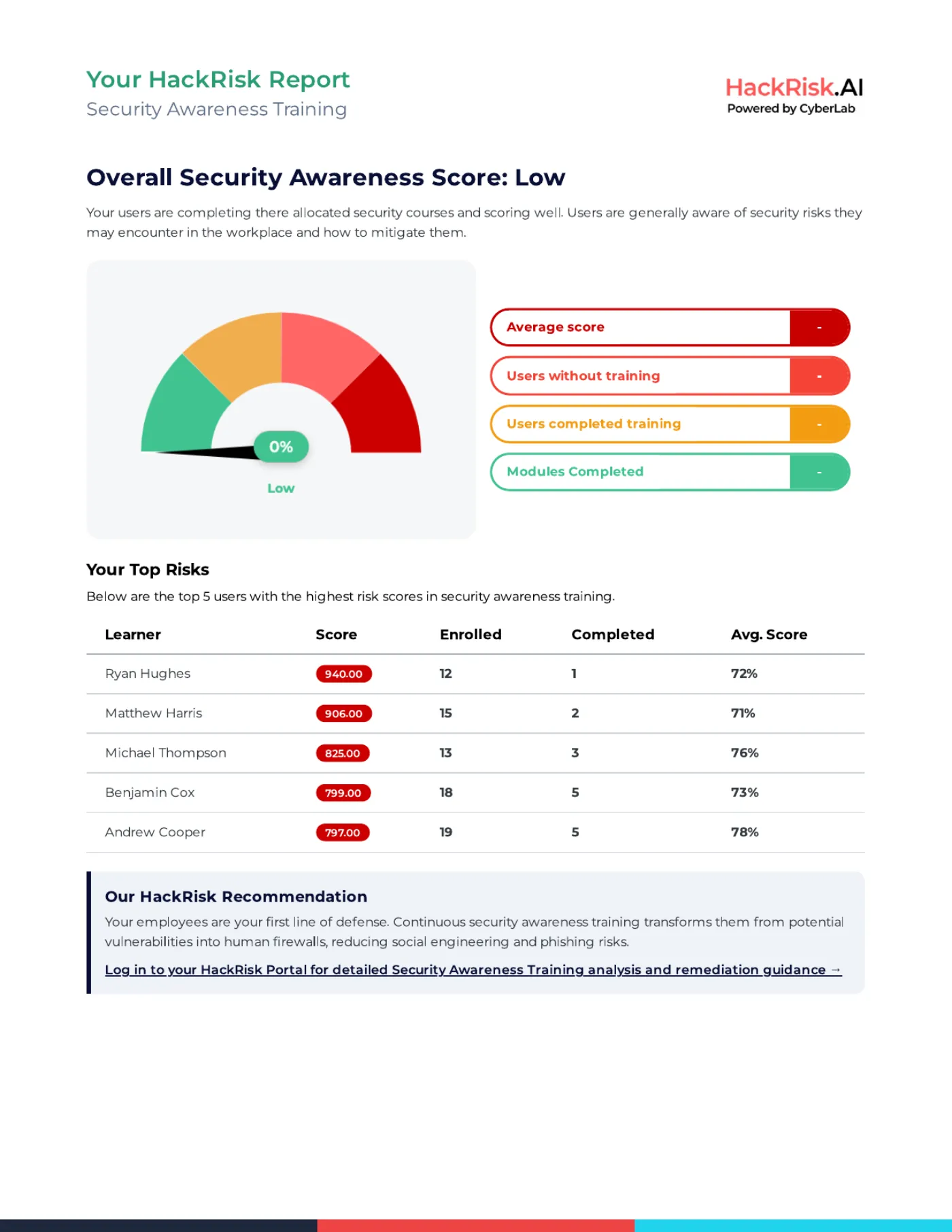
The last two sections cover the human side: who has completed their training and how they scored, and how the team responded the last time we sent them a simulated phishing email. Both are reported as trends rather than a single pass or fail, so you can see whether awareness is improving and where to aim the next round of training.
More on awareness training →Tested, not just trained
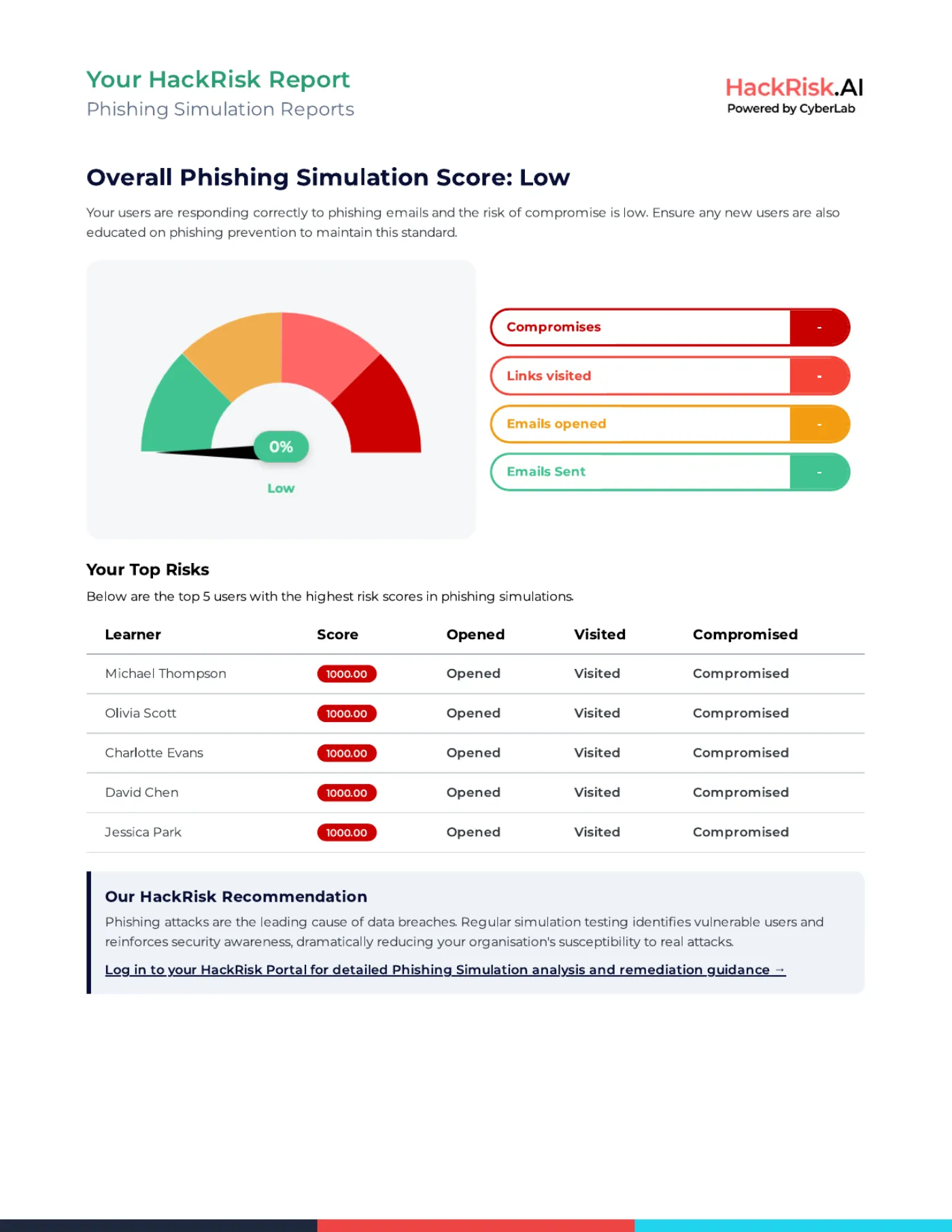
Phishing simulations close the report by measuring what people actually did rather than what they know. Clicks, credential entries and reports are all counted, and anyone who falls for a simulation is enrolled in targeted training automatically. It is the difference between a team that has sat through a course and a team that has been tested.
More on Phishing Simulations →Prefer the PDF?
The same eight pages, 704 KB.