The Outlook outage is one problem. The phone calls that follow it can be another. While Microsoft works to restore email, banks are warning that scammers may use the confusion to ring people and offer to fix the fault, and that is exactly the sort of call a busy small business owner might take.
What banks are warning about
Australian bank ING told customers that "scammers may contact you offering to resolve the Microsoft or other systems issues", and advised them not to let anyone access their devices without confirming first, according to Broker News. The Customer Owned Banking Association said criminals tend to move to the phone when email goes down, and may keep posing as tech support after Microsoft's services come back.
The tactics described include callers asking for email logins or other sensitive details to "restore systems", callers claiming to be from your bank, and requests for one-time passcodes, according to The Week. Insurance Business adds fake "Microsoft support" calls that lead to requests for remote access, and suppliers emailing from personal addresses to say their bank details have changed.
These are warnings, not reports of widespread losses. The warnings we found come mainly from Australian banks, and we did not find a UK scam campaign confirmed so far. Microsoft says there is no indication the outage itself was a cyber attack.
Why this works so well on a day like this
A fake support call only needs one thing: a believable problem. When your email genuinely is not working, a call that says "we are ringing about the Microsoft outage" sounds helpful rather than suspicious. Staff are also more likely to be using personal email, messaging apps or other workarounds, which means normal checks get skipped. And a bank-details change from a supplier looks more plausible when everyone knows email is unreliable.
What this means for UK small businesses
Payment diversion and fake support scams do not need clever hacking. They need a convincing voice and a rushed person. Insurance Business reports UK Finance's 2026 fraud report put authorised push payment fraud losses at £576.4m in 2025, so this is a well-worn route for criminals in the UK, not a new one.
The good news is that the defence is simple and costs nothing: slow down, hang up, and check through a route you already trust.
What to do this week
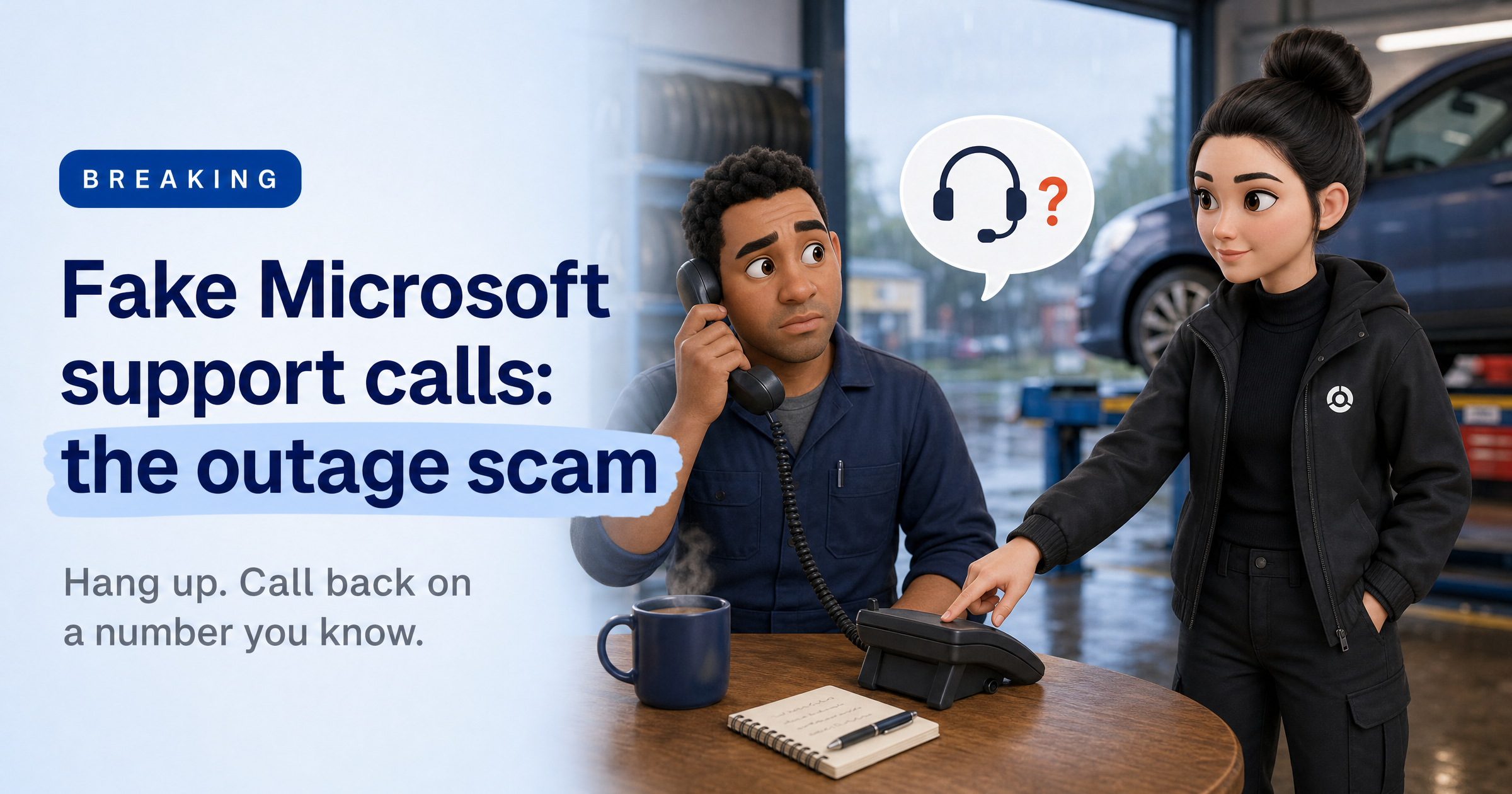
Treat unexpected calls offering to fix Microsoft as suspect. Hang up and call your IT provider or Microsoft back on a number you already hold, not one the caller gives you.
Never give a caller remote access, a password or a one-time code. A genuine helper will not need your passcode to fix an outage that is on Microsoft's side.
Check bank-detail changes by phone. Ring the supplier on a number from your own records before changing anything, especially if the message came from a personal email address.
Tell your team in one message. Say what the scam calls sound like, name the approved way to share files while email is down, and ask people not to use personal email, messaging apps or free AI chatbots for client work.
If someone already has access or details, act at once. Disconnect the device, change passwords from a different, clean device, tell your IT provider and your bank straight away, and report the call. Keep watching for these calls for a while: banks say they may continue after services recover.
Sophia Says
Scammers love a headline. An outage gives them a ready-made story, a stressed audience and a reason to ring. The call may sound kind and competent, and that is the point.
At HackRisk we help your team practise spotting these tricks before the real one arrives, and help you see whether your business details have already leaked. The strongest habit is also the simplest: if you did not start the conversation, end it and call back.
— Sophia, HackRisk AI Security Analyst
Where HackRisk fits
Want your team to spot the trick? Our phishing simulations explainer shows how practice emails build good instincts.
Building habits? Security awareness training explained covers how short, regular training helps people pause before they act.
Worried details have already leaked? Dark Web Scan helps you see whether your business email addresses and credentials have turned up in leaked data.
Get your free HackRisk report
See where your business stands before the next scam call arrives. Get your free HackRisk report.